
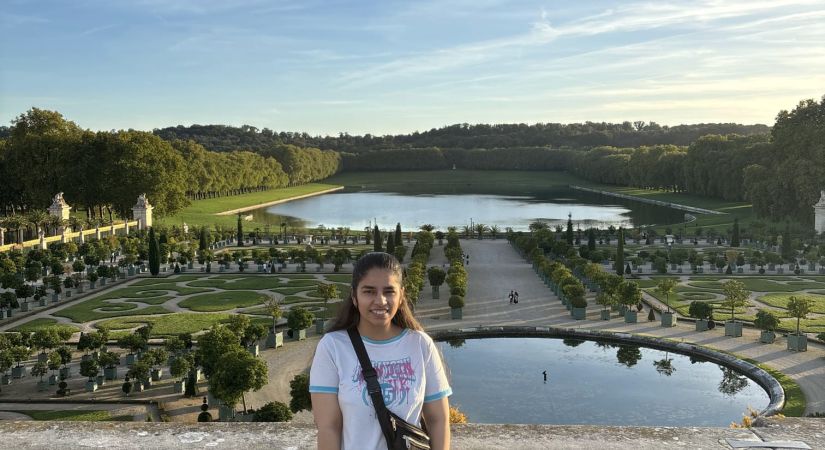
Can you tell us a bit about yourself? (Your name, hobbies, where you live, etc.)
Hi, my name is Dolcy Sareen. I grew up in India and moved to Kelowna four years ago to pursue the Bachelor of Computer Information Systems (BCIS) program at Okanagan College. Since then, I've had the opportunity to learn, grow, and gain hands-on experience through research, industry projects, and an international internship.
Outside of my studies and work, I enjoy listening to music, dancing, and spending time with my family and friends. These activities help me stay balanced and motivated, and I enjoy connecting with people from different backgrounds.
How did you learn about the different programs offered at OC?
My uncle lives in Kelowna and recommended Okanagan College when I was looking at options for higher education in Canada. He suggested both the BCIS and ICT programs. After that, I explored the Okanagan College website to learn more about the different programs they offered. As I compared the curriculum and career opportunities, I found that the BCIS program aligned best with my interests because it combined technology, business, and hands-on learning.
What drew you to the BCIS program at Okanagan College specifically – and what were you hoping it would lead to?
I was drawn to the variety of opportunities the BCIS program offered. I liked that I could learn about software development, database management, business analysis, and information systems all within one program. It gave me the chance to build both technical and business skills, which I knew would be valuable in my career. I also wanted a program that would strengthen my problem-solving, teamwork, and communication skills through hands-on projects. My goal was to build a strong foundation for a career in data analytics, application support, or software development, and the BCIS program was the perfect fit.
What does a typical week look like for you in the program — what are you are actually doing, building, or solving?
A typical week looked different as I progressed through the program. In my first year, most of my time was spent attending lectures, completing labs, and building a strong foundation in programming.
From second year onwards, many courses became much more project-based. I worked closely with classmates on group projects involving software development, database design, data warehousing, and mobile application development. Some of these projects were completed in collaboration with real-world clients, which gave us valuable experience gathering requirements, working as a team, and delivering practical solutions.
Has anything in the program surprised you — something you didn't expect to be doing or learning?
One thing that really surprised me was the opportunity to get involved in research. I didn't expect to be working on research projects while completing my undergraduate degree. In my third year, I started working as a research assistant, which opened many new doors for me. It allowed me to develop new technical and research skills, collaborate closely with faculty members, and contribute to projects that resulted in published research papers. That experience gave me confidence, strengthened my problem-solving abilities, and showed me how the knowledge I was gaining in the classroom could be applied to real-world research and innovation.
Tell us about a project, assignment, or moment where something clicked — where you felt like you were doing real work, not just studying.
One experience that really stood out was my Directed Studies project, where I worked with a team to develop a wayfinding platform for a real-world client. We collaborated with stakeholders, gathered requirements, designed the database, and built a solution to address a real problem. It felt like I was working on an industry project rather than a classroom assignment.
What made the experience even more rewarding was that our work led to a conference paper that was accepted for publication. Seeing a project progress from an idea to a real solution and then to a published paper made me realize how meaningful and impactful the work we were doing was.
How have your instructors shaped your experience? Is there a specific example that stands out?
The instructors were one of the best parts of my experience at Okanagan College. They were approachable, supportive, and brought valuable industry and research experience into the classroom. What stood out to me most was how willing they were to mentor students beyond regular class hours. Their guidance motivated me to work hard, step outside my comfort zone, and take advantage of opportunities that helped shape my academic journey.
If you're doing a co-op work term or any Work Integrated Learning (WIL) — how has the program prepared you for it, or what are you hoping to get from it?
During my studies at Okanagan College, I had the opportunity to complete a research internship at Université Paris-Est Créteil in France. The technical skills I developed in SQL, Python, databases, and software development, along with my experience as a research assistant, prepared me well for this role. During the internship, I contributed to a software project that aimed to improve accessibility for visually impaired learners in higher education. It was an incredible opportunity to apply what I had learned in the classroom to an international research project.
Who else do you think would thrive in this program — what kind of person is the BCIS degree a good fit for?
The BCIS program is a great fit for people who enjoy solving problems, working with technology, and continuously learning. You don't have to know everything before you start. If you're curious, willing to ask questions, and enjoy both technical work and collaborating with others, you'll do well in the program.
If you could say one thing to someone who's on the fence about applying — what would it be?
If you're passionate about technology and willing to put in the effort, I would definitely encourage you to apply to the BCIS program. It provides a strong foundation in both technical and business skills, while giving you plenty of opportunities to apply what you learn through hands-on projects. My advice is to make the most of your time by getting involved beyond the classroom — whether that's participating in student activities, joining research projects, pursuing personal projects. Those experiences can make your education even more rewarding and help prepare you for your future career.
Ready to build your career in tech?
Build your foundation in tech and then pick your specialized option. Our Bachelor of Computer Information Systems is built so you can go deep — in Cybersecurity, Data Engineering & AI, or Software Design — while earning real experience through co-op. Taught by instructors who come from industry, not just academia. If you have a CIS or ICT diploma, you can enter at Year 3.