Spicen rope-making workshop

Indigenous Services' latest cultural workshop offered a lot of laughs, learning but no loose ends.
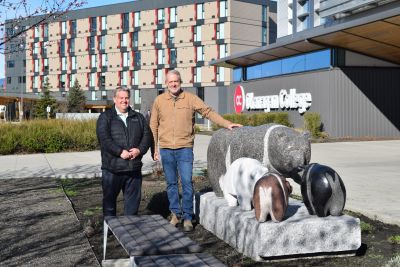
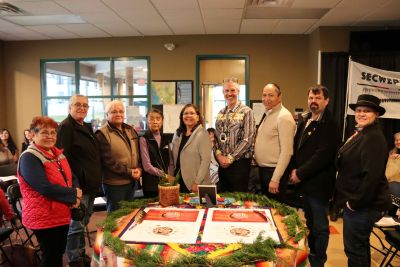
On Oct. 25, the department hosted Kevin Kaiser from School District 23 for a special spicen rope-making workshop.
Kaiser is Land-Based Learning Teacher for the Central Okanagan Indigenous Education team, which serves more than 3,300 Indigenous students in Peachland, West Kelowna, Kelowna and Lake Country.
He has developed workshops and resources for land-based teaching, in addition to earning the Premier’s Award for Teaching Excellence for developing First Nations English 9.
He stopped by the Kelowna campus on Tuesday afternoon to show workshop participants how to harvest spicen, known in settler terminology as dogbane, grown in the na’ʔk’ʷulamən garden. Indigenous peoples in syilx Okanagan territories would use the fibre in spicen to produce thread, cord, garments, nets, snares and mats. Once the spicen is harvested, it should be hung in a sheltered place upside down so the main stalk can completely dry out.
Workshop participants were also taught how to make the rope, which involves four steps:
- Cracking the branch. Once limbs are removed from the main shoot, you must press the branch with your thumbs to crack it in half lengthwise. Rotate the branch a half turn and repeat the pressure to the branch.
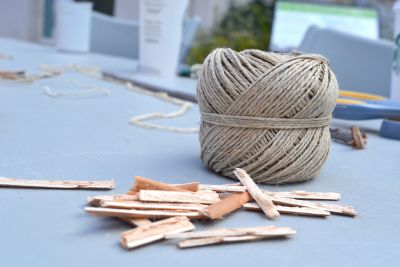
- Peeling the core away from the fibrous exterior. Gently peeling the spongy core away from the fibres is a bit time consuming, but you will be left with long strands. Indigenous peoples would use bits of the dried spicen cores as kindling for starting fires.
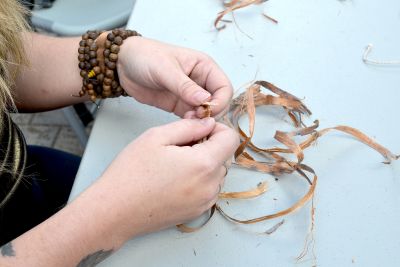
- Isolating the fibre. Take the long strands of spicen sheaths and, starting in the middle of the strands, flick the strands between your thumbnails to flake the bits of bark away from the main fibre hairs.
- Twist the strands. Starting in the middle again, put the remaining strands between the palms of your hands, and in a fast motion, quickly rub the strands together so they begin to coalesce. The oils from your hands will help condition the strands -- and the result will start to look like rope. Then, using a special twist and turn technique, the rope comes together.
Check out the Flickr gallery of images from the spicen rope-making workshop. Stay tuned for future rope-making and cultural workshops from Indigenous Services.