Mechanical Engineering Technology Diploma

Learn to design, manufacture and test mechanical systems and equipment. Build practical skills in machine design, CAD, manufacturing, robotics and automation, with opportunities to gain paid industry experience through co-operative education.

Mechanical Engineering Technology Diploma

Program at a glance

Credential

Diploma Diplomas offer practical, career-focused training and are usually completed in one to two years. They help you gain technical and workplace skills that are in demand across many industries.

Delivery mode

On-campus All classes take place in-person at one of our campuses.

Time commitment

Full-time You take a regular course load and move through the program at the standard pace. Expect to study most weekdays.

Duration

2 years

Program codes

  • Code: MECH

Cost

Domestic students $7,252 estimated first-year cost Domestic students Estimated first-year cost Kelowna, Penticton and Salmon Arm: $7,252 Estimated total program cost Kelowna, Penticton and Salmon Arm: $14,444 International students $36,582 estimated first-year cost International students Estimated first-year cost Kelowna, Penticton and Salmon Arm: $36,582 Estimated total program cost Kelowna, Penticton and Salmon Arm: $72,094

Location

  • Kelowna Full program offered in Kelowna

Available for

  • Domestic students
  • International students

Program features

TBD

Program overview

About the program

Learn fundamental engineering principles and practices while gaining a working knowledge in the areas of material use, structures, fluids, power, machine design, manufacturing, thermodynamics, quality and instrumentation and control.


Mechanical engineering technologists help turn engineering concepts into working products, machines and systems. In this two-year diploma, you will develop a practical understanding of mechanical design, manufacturing and engineering systems while learning to solve technical problems.

Study materials, statics, dynamics, strength of materials, fluid power, thermodynamics, HVAC, machine design, automation and robotics. Apply your knowledge through laboratory work, technical drawings, manufacturing activities and an engineering project. You will also learn to use current computer software to support design, analysis and production.

The program is nationally accredited by Technology Accreditation Canada at the technologist level. You can also apply for co-operative education work terms to gain experience in industry while earning income.

What you'll learn

  • Apply engineering principles to mechanical problems
  • Create and interpret engineering drawings
  • Analyze materials, structures and mechanical components
  • Design and evaluate mechanical systems
  • Apply manufacturing processes and fabrication methods
  • Work with fluid power and mechanical systems
  • Apply thermodynamics and HVAC principles
  • Use automation, robotics and computer-aided manufacturing
  • Apply quality assurance and project management principles
  • Communicate technical information clearly
  • Develop and present engineering projects
Skills you'll learn
  • Mechanical design
  • Engineering graphics and CAD
  • Materials analysis
  • Manufacturing processes
  • Mechanical fabrication
  • Fluid power and hydraulics
  • Thermodynamics
  • HVAC systems
  • Robotics and automation
  • Computer-aided manufacturing
  • Quality management
  • Technical problem-solving
  • Project management
Tools you'll learn
  • Computer-aided design (CAD) software
  • Engineering drawing and modelling tools
  • Computer-aided manufacturing (CAM) systems
  • Robotics and automation equipment
  • Manufacturing and fabrication tools
  • Hydraulic and pneumatic systems
  • Measurement and testing instruments
  • Engineering analysis software
  • Technical documentation tools

Work-integrated learning

Gain paid experience through co-operative education

Apply your classroom learning in a relevant workplace through optional co-op work terms. The program outline includes opportunities for multiple four-month work terms, allowing you to develop practical experience, build professional connections and understand how engineering technology is used in industry.

Co-op participation is subject to eligibility requirements, including a minimum overall GPA of 60% for engineering technology diploma students. Students are responsible for applying to available positions through Okanagan College's Careers Hub.


OC's Mechanical Engineering Technology Diploma is a Technology Accreditation Canada (TAC) nationally accredited program at the technologist level.

The mechanical engineering technologist is involved in the design, manufacture, testing, installation, operation and maintenance of a wide variety of machines and mechanical equipment. Through the Mechanical Engineering Technology program at Okanagan College, students are trained in fundamental engineering principles and practice. Students will gain a working knowledge in the fundamentals of materials, structures, fluids, power, machine design, manufacturing, thermodynamics, HVAC, quality, and instrumentation and control. The use of current computer software is emphasized throughout the program.

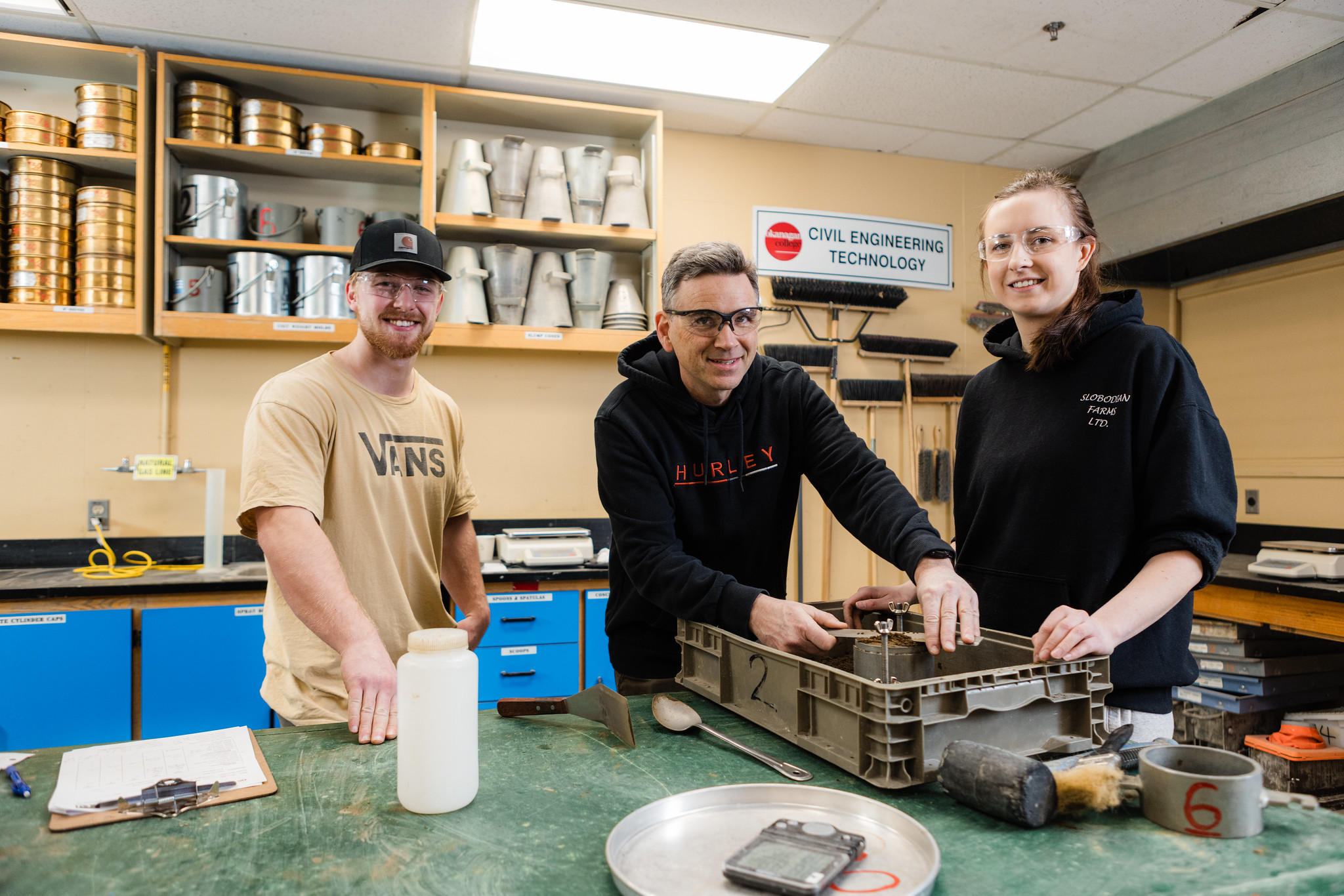
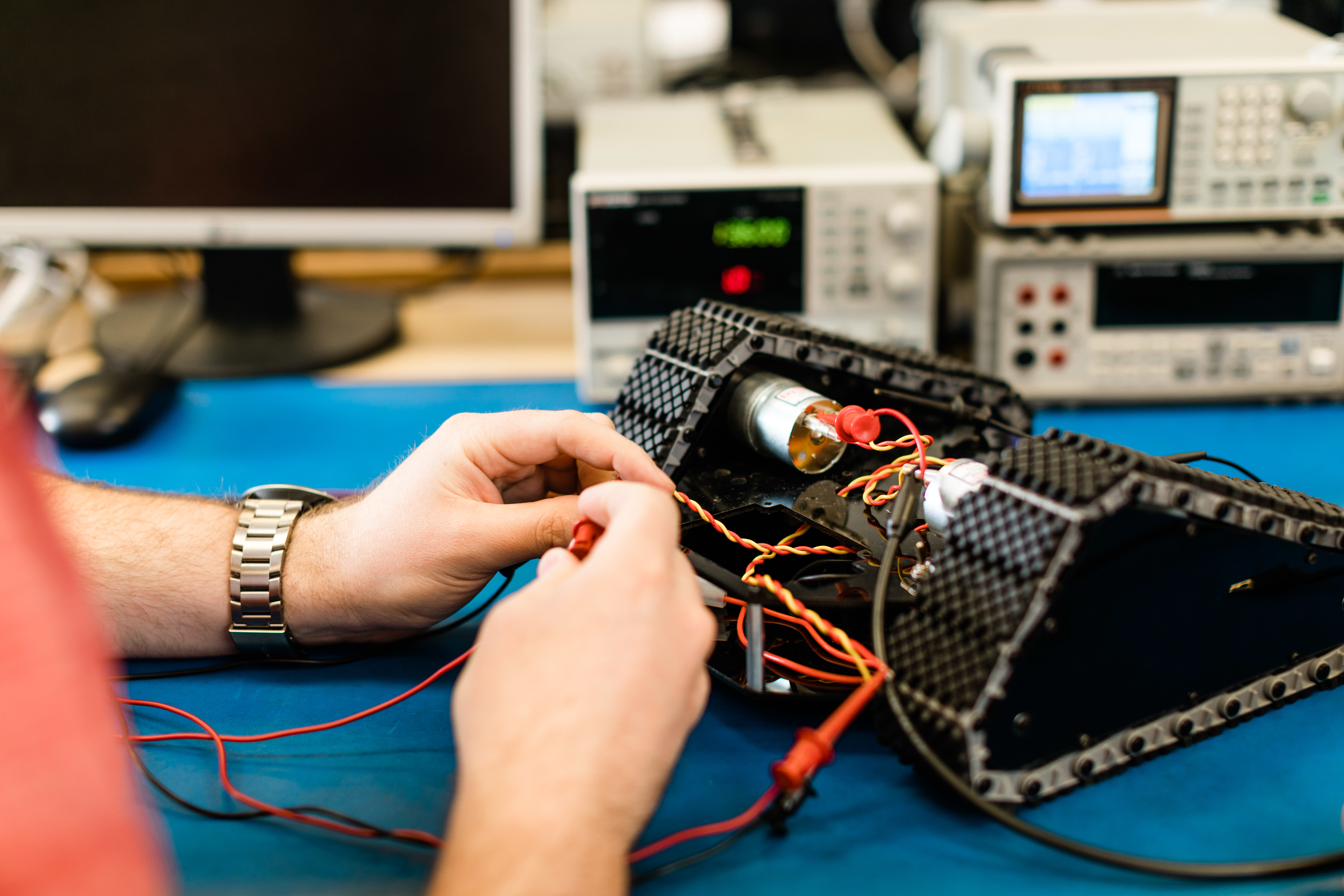
A diverse and stimulating program, Mechanical Engineering Technology incorporates labs and field trips to reinforce theoretical background, and to develop appropriate methods of approach and solution of engineering problems.

Graduates may be employed by a very broad range of industrial organizations. Opportunities include product design, specification, installation and maintenance of equipment, cost estimating, technical sales, quality management, inspection, production planning, automation, CAD/CAM, robotics, and research and development. Mechanical engineering technologists are in demand due to the tremendous diversity of the discipline.

National Accreditation: The Mechanical Engineering Technology program is nationally accredited by Technology Accreditation Canada (TAC) with recognized major competency areas of Mechanical Component Design, Engineering Design and Drawings, Mechanical Systems, Manufacturing Automation, and Project Management.

Tuition and fees

Kelowna, Penticton and Salmon Arm

Fee Semester I Semester II
Tuition $2,785 $3,315
College anciliary fees $362 $362
Student association fees $89 $89
Health & dental $250 $0
Materials/other $0 $0
Estimated term cost $3,486 $3,766
Fee Semester III Semester IV
Tuition $3,125 $2,915
College anciliary fees $362 $362
Student association fees $89 $89
Health & dental $250 $0
Materials/other $0 $0
Estimated term cost $3,826 $3,366
Total estimated program cost: $14,444

Kelowna, Penticton and Salmon Arm

Fee Semester I Semester II
Tuition $16,285 $18,645
College anciliary fees $362 $362
Student association fees $89 $89
Health & dental $500 $250
Materials/other $0 $0
Estimated term cost $17,236 $19,346
Fee Semester III Semester IV
Tuition $17,390 $16,470
College anciliary fees $362 $362
Student association fees $89 $89
Health & dental $500 $250
Materials/other $0 $0
Estimated term cost $18,341 $17,171
Total estimated program cost: $72,094
  • Domestic students
    Estimated first-year cost
    Kelowna, Penticton and Salmon Arm: $7,252
    Estimated total program cost
    Kelowna, Penticton and Salmon Arm: $14,444
  • International students
    Estimated first-year cost
    Kelowna, Penticton and Salmon Arm: $36,582
    Estimated total program cost
    Kelowna, Penticton and Salmon Arm: $72,094
  • Fees include all mandatory fees: Activity fee, Health & Dental, Student Association fee, Education Technology fee, Development fee.

  • Detailed International tuition fees information.

  • Check if this program is student loan eligible. View Financial Aid and Awards

  • All amounts are approximate and are subject to change.

  • Detailed domestic tuition and fees information

Admission and program requirements

Regular Students

  • B.C. secondary school graduation or equivalent
  • English 12 with minimum 60% or alternatives.
  • Math requirement:
    • A minimum of 60% in any of:
      • Pre-calculus Grade 12
      • Principles of Mathematics 12
      • Adult Basic Education MATH 012
      • Okanagan College MATH 120
    • Or a minimum of 70% in an Okanagan College Mathematics 12 Proficiency Test

  • Physics 11 (Physics 12 is recommended) is required. Chemistry 11 or Chemistry 12 is strongly recommended.
  • The Mechanical Engineering Technology program stresses the use of computers in solving engineering problems. It is recommended that students entering the program have a working knowledge of word processing, spreadsheets and presentation tools software. An introductory course in computers or computer experience is strongly recommended.

Mature Students

  • Applicants who do not have secondary school graduation may apply as a mature student provided they are at least 19 years of age and have not attended secondary school on a full-time basis for a year or more. Mature students must complete specific entrance requirements that apply to regular applicants.
  • Mature students without the required 60% grade in Mathematics 12 will be permitted to write a Mathematics 12 challenge exam.
  • Exemption from these admission requirements for mature students is based upon a department interview, work experience, educational background and the results of a Mathematics 12 challenge exam.

A minimum of 50% of the program must be completed through OC including completion of a minimum of 18 credits of 200-level courses or higher.

Start date
Location
Delivery mode
Application status
Sep. 2027
Kelowna
On-campus
Open
Details pending

Program details

Year 1

Semester 1

MECH 131 - Engineering Graphics I
MECH 133 - Materials Technology
MECH 134 - Statics
MECH 136 - Application of Engineering Principles
MECH 139 - Mechanical Fabrication
CMNS 133 - Technical Writing and Communications I
MATH 135 - Mathematics for Mechanical Engineering Technology I
Co-operative Education Employment Seminar

Semester 2

MECH 142 - Engineering Graphics II
MECH 144 - Dynamics
MECH 147 - Strength of Materials
MECH 148 - Manufacturing Processes
MECH 149 - Manufacturing Applications
MATH 145 - Mathematics for Mechanical Engineering Technology II
MECH 152 - Welding
MECH 161 - Fluid Power
MECH152 Welding is offered over a one-week period

Co-op Term

MECH 101 - Co-op Education Work Term I
MECH 102 - Co-op Education Work Term II
MECH101 Co-op Work Term I (May-August) 4 months
MECH102 Co-op Work Term II(September - December) 4 months

Year 2

Semester 3

MECH 232 - Machine Design
MECH 233 - Technology Management and Quality
MECH 234 - Thermodynamics
MECH 237 - Engineering Graphics III
MECH 239 - Automation
ELEN 236 - Electronic Technology I
MECH 257 - Engineering Graphics IV
MECH 261 - Fluid Mechanics
MECH 257 offered over a one-week period

Co-op Term

MECH 103 - Co-op Education Work Term III
MECH103 Co-op Work Term III (May - August) 4 months

Semester 4

MECH 240 - Project
CMNS 144 - Technical Communication II for Mechanical Engineering Technology
MECH 243 - Operations Management
MECH 244 - Applied Thermodynamics and HVAC
MECH 247 - Computer Aided Manufacturing
MECH 249 - Robotics and CIM
ELEN 246 - Electronic Technology II

Explore similar programs